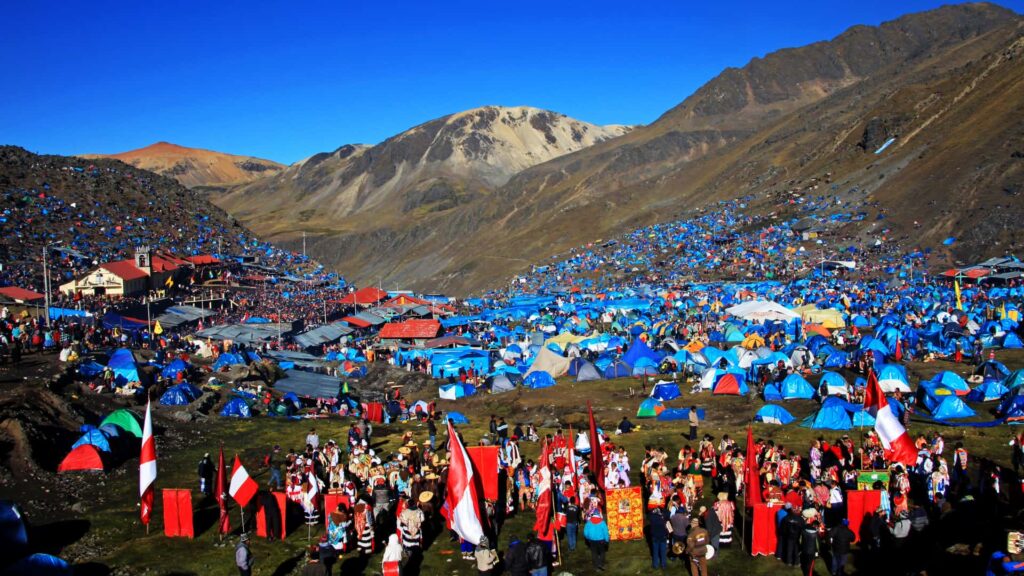
Inca history reveals a civilization that excelled in adapting to its environment through remarkable advancements in economy, engineering, and religion. With a state-controlled economic system, they efficiently managed agriculture, labor, and resource distribution across diverse landscapes. Their engineering prowess transformed rugged mountains into habitable and fertile land, showcasing innovations in architecture, road construction, and water management. Meanwhile, religion served as a powerful force uniting the empire, with elaborate ceremonies and sacred sites dedicated to celestial beings. This chapter explores how these three pillars—economy, engineering, and faith—shaped the greatness of the Inca civilization.
Organization of the economy of the Inca History
Tribute and obligatory labor
The State did not demand tribute in kind (e.g. corn, potatoes, etc.), but the labor of the tributaries.
- Work in:
- State and cult lands.
- Army
- Public works
- Handicrafts
- Salt mines and state herds
Tribute was organized according to:
- Age:
Purec (25-50 years): chief tribute payers, responsible for compulsory labor. - Decimal division:
Organization of heads of households into numerical groups.
State control over the population
- Constant inspections and censuses:
- Births, marriages, deaths.
- Diseases, disabilities
- Widows and orphans
Registration by the Quipucamayoc:
- Use of the quipu (knotted cords) as an accounting tool.
Work organization and administrative hierarchy
Decimal groups:
- Pachaca (100 tributaries): Controlled by the pachaca-camayoc
- Pisca pachaca (500 tributaries)
- Huaranca (1,000 tributaries)
- Pisca huaranca (5,000 tributaries)
- Hunu (10,000 tributaries) → Possible equivalent to a lineage or ethnic group.
Authorities and supervision:
- Every 10,000 tributaries → 3,333 officials in charge of administration.
- Exempt from mita (compulsory labor).
Leaders at each level:
- Local curacas.
- Pachaca camayoc
- Hunu camayoc
Storage and distribution system
- State warehouses:
- Local, provincial and metropolitan: They supplied elites and temples.
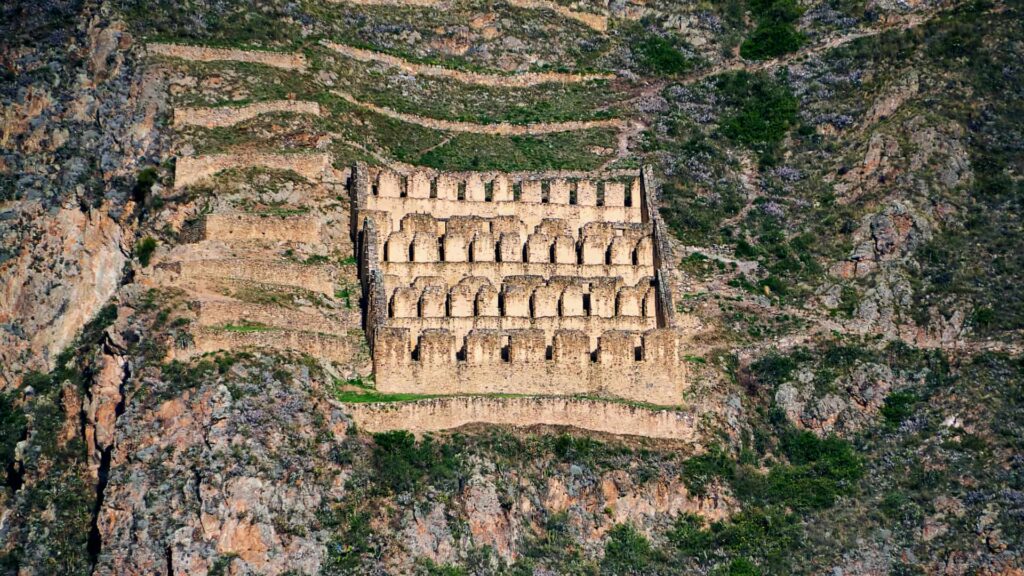
- Surplus production:
- Stored in tambos (warehouses on imperial roads).
- Use for armies and workers in state service.
Inca engineering
The Inca History and the engineering was undoubtedly one of the most advanced of all the empires studied, due to its complex management of giant rocks and water resources.
Adaptation to the geographical environment.
Natural challenges:
- Coast: alternation of fertile valleys and deserts.
- Highlands: Cold punas and protected valleys.
- Jungle: Adverse tropical climate.
Technological response of Andean man:
- Exploitation of previous knowledge of previous cultures.
- Inca organization to maximize agricultural and urban production.
Engineering works:
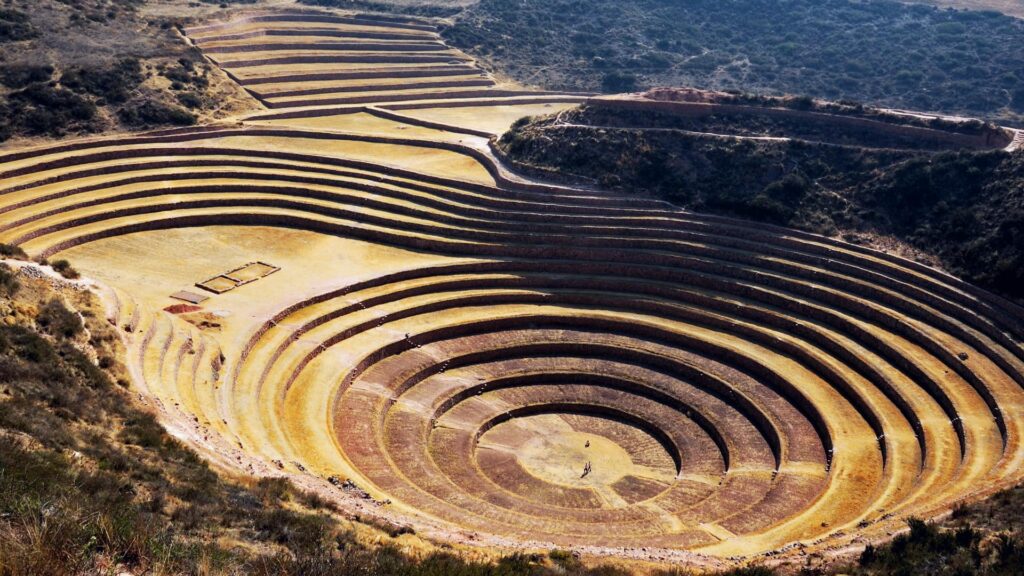
Staggered terraces (platforms):
- Expansion of agricultural land.
- Structured urban planning.
- Efficient drainage and canalization network.
Urban infrastructure and architecture:
- Resistance studies of lithic materials.
- Advanced anti-seismic techniques.
- Durable constructions despite frequent earthquakes.
Maximum example: Machu Picchu – Choquequirao
- Combination of urbanism and agriculture.
- Terraces, squares and neighborhoods interconnected by stairways.
- Harmonious integration with the mountainous geography.
Agricultural terraces
- Expansion of arable land.
- Protection against wind and rain erosion.
- Water filtration system to prevent evaporation and losses.
- Public works
- Road network and unification of the empire.
- Roads to connect Tahuantinsuyu.
- Complement to the official language (Quechua) and common religion.
- Key instrument for administration and supply.
Construction and maintenance of roads
- Responsibility of the local ayllus.
- Supervision by the curacas.
Inca bridges
- Adaptation to the geography by means of:
- Bridges of stone and wood.
- Hanging bridges over canyons and rivers.
- Constant surveillance for maintenance and control of travelers.
- Toll system (pontazgo) to regulate traffic.
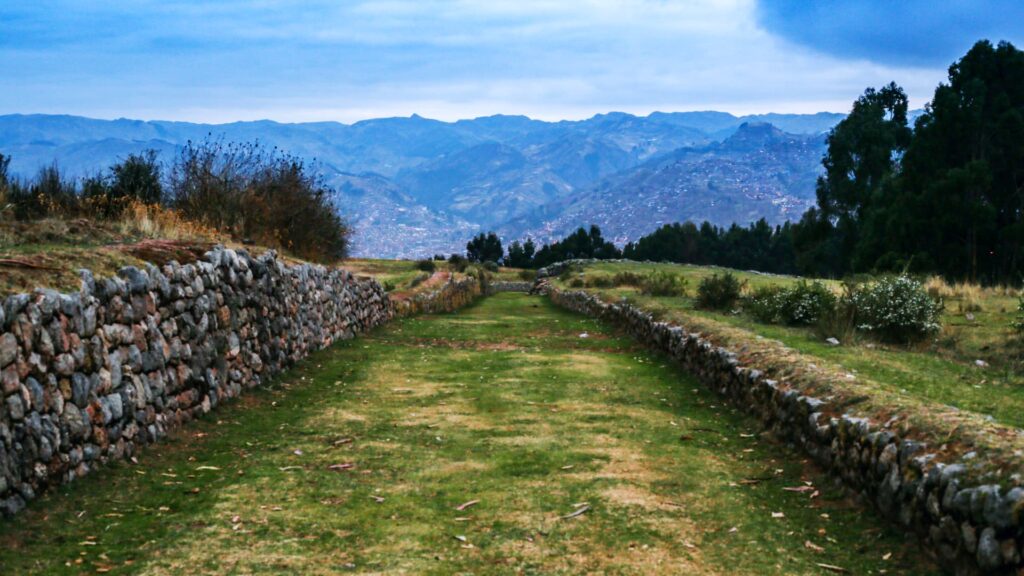
Religion of the Incas
In the Inca History, the Incas had a very strong religion, based on their beliefs and also on the elements, in this way they could share their religion with the people that were being incorporated into the Empire.
Religious Character of the Inca People
- Deeply religious society.
- Constant presence of supernatural forces and beings.
- Need for rites and offerings to obtain their favor.
- Influence of pre-Inca traditions and differentiation between:
- Religion of the elites.
- Religion of the people.
Principal Divinities
a) Viracocha
- God creator of the world and humanity.
- Proceeding from Lake Titicaca.
- Related to water and the sea.
- He was not a solar god, but he had celestial attributes.
- Cult maintained by the elites.
b) The Sun (Inti)
- State divinity of the Inca Empire.
- Cult officialized by Pachacuti.
- Linked to the Inca dynasty.
- Representation in the temple of Coricancha (golden enclosure).
- Disappeared with the fall of the Empire.
c) Other celestial divinities
Related to Viracocha and Inti.
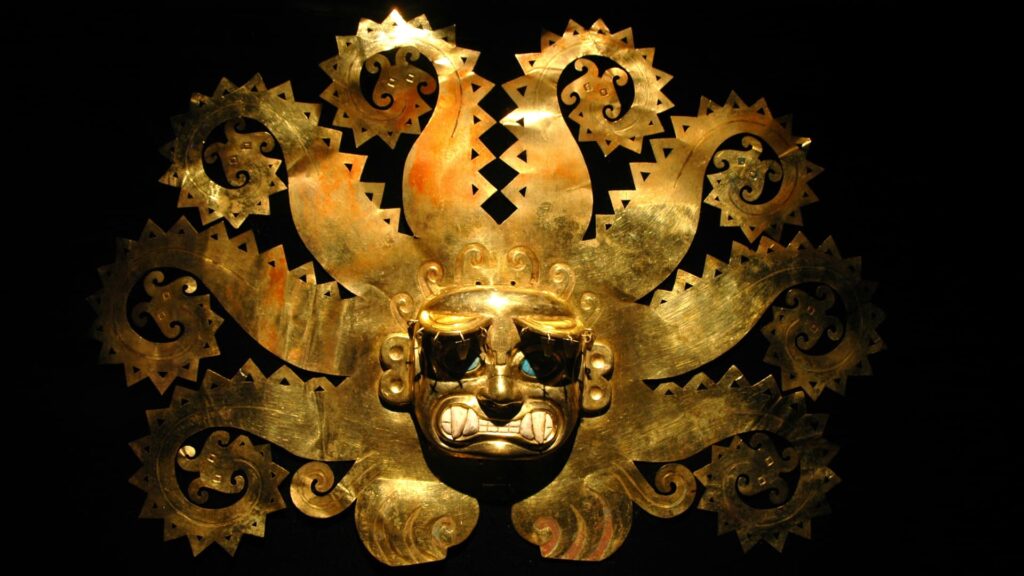
Religion of the People
- Based on the cult of local and natural divinities.
- Animistic and naturalistic practices.
- Huacas: objects, places or beings with sacred characteristics.
- Mountains, unusually shaped stones, abnormal plants or animals.
- Mummified bodies of ancestors (mallquis).
- Pacarinas: places of origin of groups or lineages.
These beliefs survived the fall of the Empire and persist in the Ande today.
Rites and Ceremonies
Official worship:
- Offerings of great wealth.
- Sacrifices of llamas and, sometimes, humans.
- Synchronized celebrations throughout the Empire.
- Based on agricultural cycles (equinoxes and solstices).
Feast of Inti Raymi:
- Great celebration of the June solstice.
- Main festivity in honor of the Sun.
- It is still celebrated today in Sacsayhuaman, Cusco.
- Important cultural and touristic event.
Now we could say that you are an expert in the history of the Incas! So, don’t wait any longer and visit this great city that has a lot to show you and give you the best for your trip and your life!